
 © RomKri
\ Jerusalem Zoo
© RomKri
\ Jerusalem Zoo © RomKri
\ The Mandrills
© RomKri
\ The Mandrills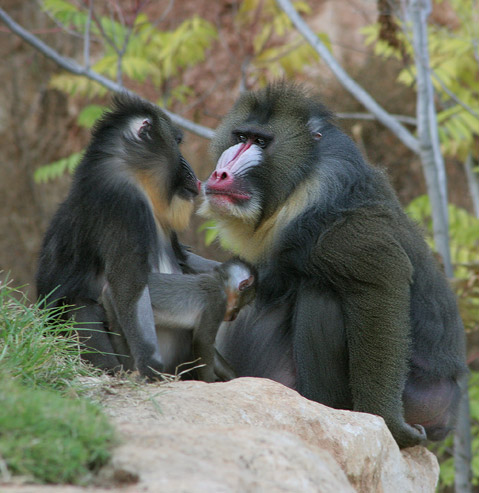
The Jerusalem Biblical Zoo boasts one of the world´s largest troops of captive mandrills. The mandrill (Mandrillus sphinx) is perhaps the most colourful of the primates. The adult male is most conspicuous, thanks to the bold colors on his face and hindquarters, and by virtue of his sheer size, which may be double that of the female. Mandrills are quite common in zoos throughout the world, and the behavior of this species in captivity has been well documented. But recent studies have shown that mandrill populations in the wild have a most intriguing social structure, and that their social behavior bears little resemblance to that of a troop in captivity. Captive adult males dominate and dictate the course of their troop´s daily life; apparently, however, in the wild, mature males are almost entirely solitary, unlike the females, which are exceptionally gregarious. Wild females and juveniles have been found to live in troops that actually number many hundreds of individuals, while the adult males evidently have nothing to do with the troops, except during the relatively short mating season.
http://www.jerusalemzoo.org.il/english/upload/tour/mandrill.html
http://www.jerusalemzoo.org.il/english/upload/tour/mandrill.html
© RomKri
\ In Jerusalem Zoo © RomKri
\ Jerusalem Zoo
© RomKri
\ Jerusalem Zoo © RomKri
\ Jerusalem Zoo
© RomKri
\ Jerusalem Zoo © RomKri
\ Jerusalem Zoo
© RomKri
\ Jerusalem Zoo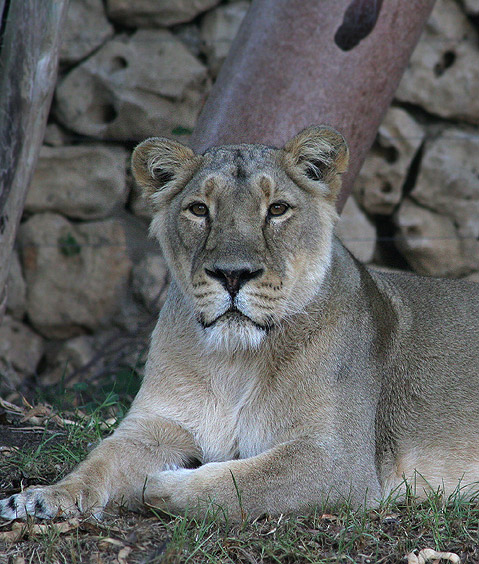 © RomKri
\ Jerusalem Zoo
© RomKri
\ Jerusalem Zoo © RomKri
\ In Jerusalem Zoo
© RomKri
\ In Jerusalem Zoo © RomKri
\ In Jerusalem Zoo
© RomKri
\ In Jerusalem Zoo © RomKri
\ Asiatic Lion
© RomKri
\ Asiatic Lion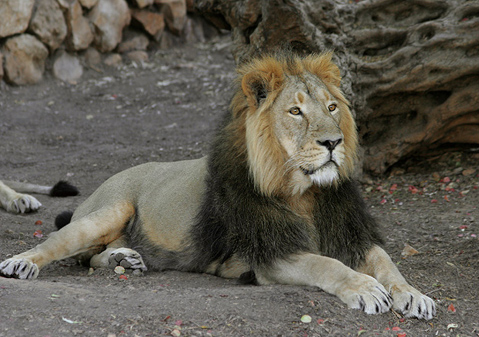
The lion is the symbol of the modern city of Jerusalem, and until the 12th century, lions lived in the hills surrounding the city. The local inhabitants were both awed and intimidated by the power of this most spectacular of animals. In fact, the Bible uses seven different names to refer to the lion.
Lions have gradually disappeared from many regions of the world as a result of habitat destruction and reckless hunting, as well as exploitation for the purpose of public amusement; in the days of the Roman Empire for instance, lions would be imported to entertain the masses by doing battle with either human gladiators or other animals. Eventually they became extinct throughout much of their former ranges. But unlike many of the populations of African lions that continue to thrive today, the formerly vast population of the Asiatic lion (Panthera leo persica) has now been confined to the Gir Forest of northwest India, where only a few wild remnants still persist. The Asiatic lion is exceptionally rare, and is in extreme danger of extinction. Our Asiatic lions are part of the breeding project of the European Endangered Species Program (EEP).
http://www.jerusalemzoo.org.il/english/upload/tour/lion.html
Lions have gradually disappeared from many regions of the world as a result of habitat destruction and reckless hunting, as well as exploitation for the purpose of public amusement; in the days of the Roman Empire for instance, lions would be imported to entertain the masses by doing battle with either human gladiators or other animals. Eventually they became extinct throughout much of their former ranges. But unlike many of the populations of African lions that continue to thrive today, the formerly vast population of the Asiatic lion (Panthera leo persica) has now been confined to the Gir Forest of northwest India, where only a few wild remnants still persist. The Asiatic lion is exceptionally rare, and is in extreme danger of extinction. Our Asiatic lions are part of the breeding project of the European Endangered Species Program (EEP).
http://www.jerusalemzoo.org.il/english/upload/tour/lion.html
© RomKri
\ Syrian Brown Bear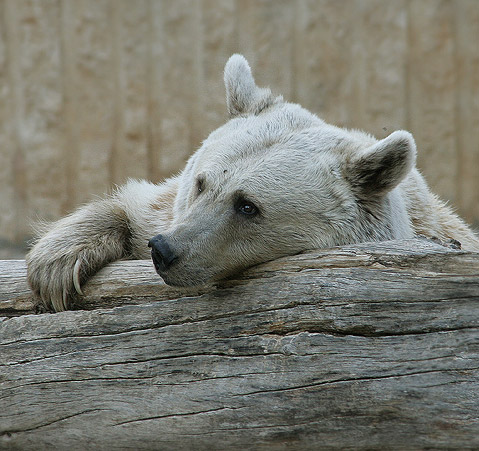
In the early part of the twentieth century, the Syrian brown bear (Ursus arctos syriacus) disappeared from the landscape of the Land of Israel. In the distant past, bears were quite common in this country, and the Biblical literature suggests that once upon a time, the human inhabitants of the region would frequently encounter these beasts. The bears in the zoo are among the last survivors of this subspecies, which is now thought to be extinct in the wild. Incidentally, these bears are generally regarded today as members of the same species as the Grizzlies.
The family of bears in our exhibit is relatively large, very active, and quite irrepressible. At times you can meet the keepers at this exhibit, and hear interesting stories about the individual bears. On any day, you can see them frolic in the water, and see unmistakable evidence of their keen intelligence.
http://www.jerusalemzoo.org.il/english/upload/tour/bear.html
The family of bears in our exhibit is relatively large, very active, and quite irrepressible. At times you can meet the keepers at this exhibit, and hear interesting stories about the individual bears. On any day, you can see them frolic in the water, and see unmistakable evidence of their keen intelligence.
http://www.jerusalemzoo.org.il/english/upload/tour/bear.html
© RomKri
\ Jerusalem Zoo © RomKri
\ The Mandrills
© RomKri
\ The Mandrills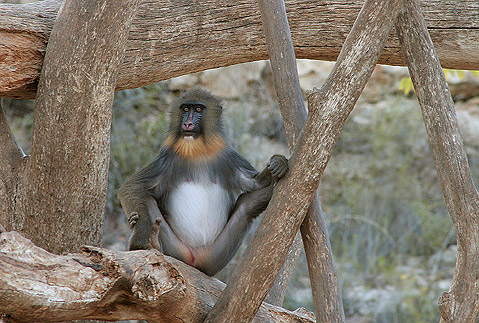
The Jerusalem Biblical Zoo boasts one of the world's largest troops of captive mandrills. The mandrill (Mandrillus sphinx) is perhaps the most colourful of the primates. The adult male is most conspicuous, thanks to the bold colors on his face and hindquarters, and by virtue of his sheer size, which may be double that of the female. Mandrills are quite common in zoos throughout the world, and the behavior of this species in captivity has been well documented. But recent studies have shown that mandrill populations in the wild have a most intriguing social structure, and that their social behavior bears little resemblance to that of a troop in captivity. Captive adult males dominate and dictate the course of their troop's daily life; apparently, however, in the wild, mature males are almost entirely solitary, unlike the females, which are exceptionally gregarious. Wild females and juveniles have been found to live in troops that actually number many hundreds of individuals, while the adult males evidently have nothing to do with the troops, except during the relatively short mating season.
http://www.jerusalemzoo.org.il/english/upload/tour/mandrill.html
http://www.jerusalemzoo.org.il/english/upload/tour/mandrill.html
© RomKri
\ In Jerusalem Zoo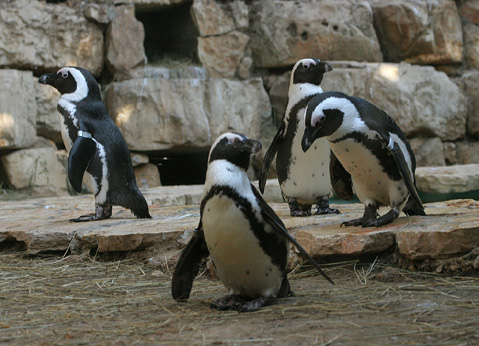 © RomKri
\ The Penguins
© RomKri
\ The Penguins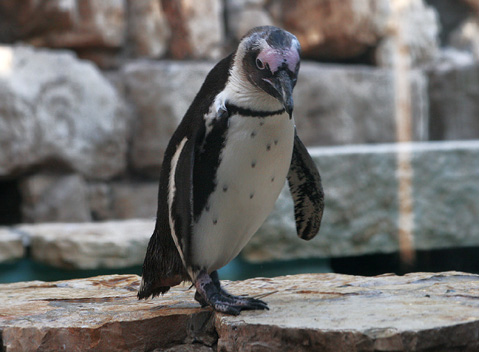
A gift of the Zaidenberg family of Chicago, Illinois, the Penguin Exhibit was opened in the summer of 2000. It is one of the most attractive exhibits in the zoo, enabling the public to view our Black-footed penguins (Spheniscus demersus) both on land and in the water. Although we tend to automatically associate penguins with frigid environments, the Black-footed species is native to South Africa, and is accustomed to a warm temperate climate. In fact, there are some 17 species of penguin in the world, and only two of them actually live in Antarctica.
Two or three feedings take place in the exhibit every day. If you're lucky enough to witness one of these feedings, you'll undoubtedly be amused by the raucous manner in which the penguins gang up on their keeper to receive their portion of fish, which is then swallowed whole, with one long gulp. Also noteworthy is the ability of the keeper who must, amidst all the insanity, keep track of just who is eating what, and how much!
http://www.jerusalemzoo.org.il/english/upload/tour/penguins.html
Two or three feedings take place in the exhibit every day. If you're lucky enough to witness one of these feedings, you'll undoubtedly be amused by the raucous manner in which the penguins gang up on their keeper to receive their portion of fish, which is then swallowed whole, with one long gulp. Also noteworthy is the ability of the keeper who must, amidst all the insanity, keep track of just who is eating what, and how much!
http://www.jerusalemzoo.org.il/english/upload/tour/penguins.html
© RomKri
\ The Mandrills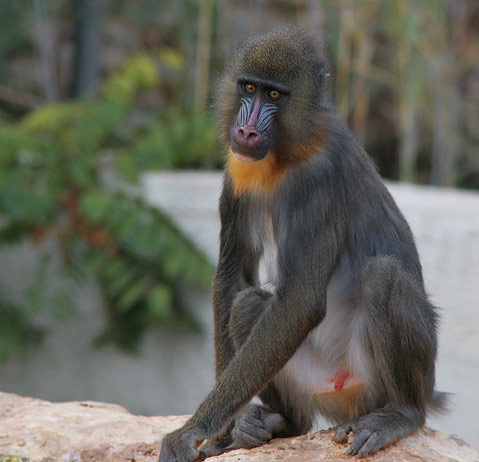
The Jerusalem Biblical Zoo boasts one of the world's largest troops of captive mandrills. The mandrill (Mandrillus sphinx) is perhaps the most colourful of the primates. The adult male is most conspicuous, thanks to the bold colors on his face and hindquarters, and by virtue of his sheer size, which may be double that of the female. Mandrills are quite common in zoos throughout the world, and the behavior of this species in captivity has been well documented. But recent studies have shown that mandrill populations in the wild have a most intriguing social structure, and that their social behavior bears little resemblance to that of a troop in captivity. Captive adult males dominate and dictate the course of their troop's daily life; apparently, however, in the wild, mature males are almost entirely solitary, unlike the females, which are exceptionally gregarious. Wild females and juveniles have been found to live in troops that actually number many hundreds of individuals, while the adult males evidently have nothing to do with the troops, except during the relatively short mating season.
http://www.jerusalemzoo.org.il/english/upload/tour/mandrill.html
http://www.jerusalemzoo.org.il/english/upload/tour/mandrill.html
© RomKri
\ Jerusalem Zoo © RomKri
\ Jerusalem Zoo
© RomKri
\ Jerusalem Zoo © RomKri
\ Jerusalem Zoo
© RomKri
\ Jerusalem Zoo © RomKri
\ Jerusalem Zoo
© RomKri
\ Jerusalem Zoo